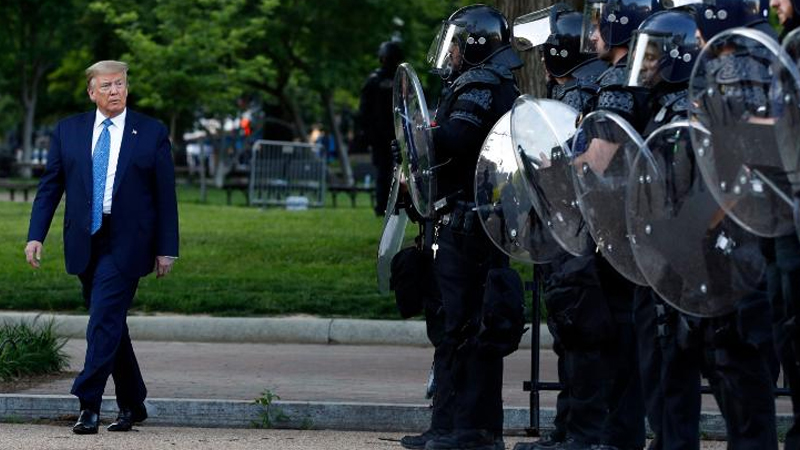
The first week of June unfolded in historic bursts in the US, five days of turmoil and tension the US President, Donald Trump watched unfold mostly from inside an ever-expanding buffer of security and its borders patrolled by a militarized police force.
As Trump stretched the limits of executive power, his willingness and ability to address the civic, health and economic crises buckling the nation have been deeply challenged.
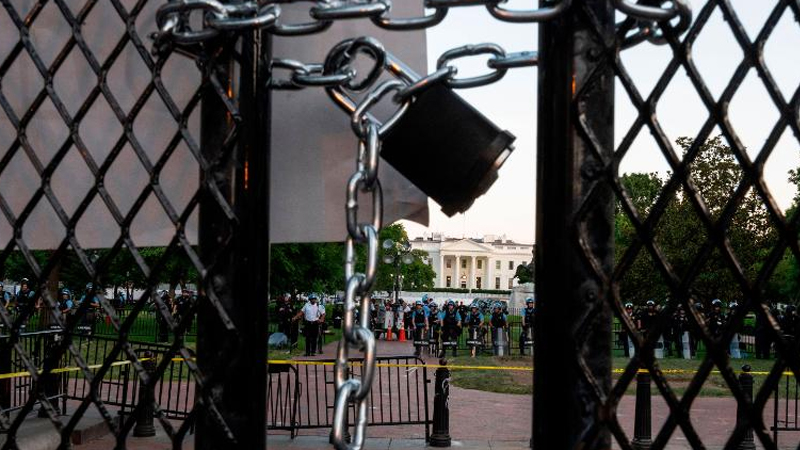
A locked padlock keeps a metal fence recently erected in front of the White House and meant to keep protestors at bay closed on June 2, 2020. [Source: CNN]
Trump spent much of the week out of public view after a photo opportunity near St. John's Church on Monday devolved into a violent, chemical-misted spectacle that was widely condemned and which prompted harsh internal recriminations for those responsible for its execution.
Trump had intended to spend this weekend at his fenced private golf club in New Jersey as tens of thousands of protesters descend on Washington to demand action on systemic racism and police brutality but aides raised concerns about the optics of him golfing as protests were expected to continue.
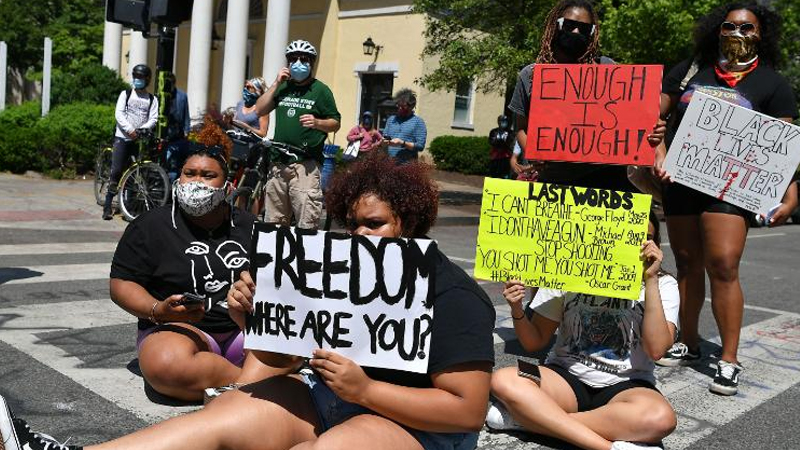
People protest the death of George Floyd outside Lafayette Square near the White House in Washington, DC on Monday [Source: CNN]
Instead, he remains in an ever-more-militarized city, where what unfolded this week, both inside and outside his expanding protective bubble may be remembered as among the most consequential in memory.
[Source: CNN]