
Fiji's total exports declined by 18 percent in the first seven months of the year.
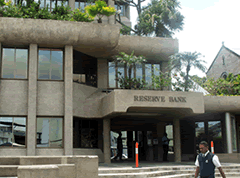
According to the Reserve Bank of Fiji (RBF), domestic exports fell by 13 percent due to lower earnings from sugar, mineral water, timber, garments, uncooked pasta, flour, and fruits and vegetables.
The decline in total exports was larger at around 18 percent due to lower receipts from re-exports of mineral fuel.
The RBF said imports also fell during the same period by -16.4 percent, led mainly by lower mineral fuel payments.
The lower fuel prices significantly contributed to the lower import bill.
According to the Reserve Bank's Economic Review, there are signs of a strong pick-up in visitor arrivals since July, particularly from our larger source markets, Australia and New Zealand.
The bank says new and increased airline services, some of which are starting towards the end of the year, should also augur well for the tourism industry in 2010 and beyond.
Meanwhile export earnings from fish and gold showed an annual growth. Gold earnings are being supported by high international gold prices. On the downside, cane and sugar production declined over the year to August and copra output was lower in July, when compared with the same period in 2008.
However Fiji's foreign reserves still look strong at the moment. As at November 4th, foreign reserves stood at a record 1.05 billion.
Stats show decline in total exports
Related Stories

We are committed to holding elections – Siromi Turaga
Questions were raised during Dialogue Fiji’s Constitution review discussion on whether the government can delay the general elections and complete the Constitution review however Acting Attorney General Siromi Turaga
Fijian economy on track to grow for fourth consecutive year in 2025 by 3.4%
The Fijian economy is on track to grow for the fourth consecutive year in 2025 by 3.4 percent, following a 3.5 percent expansion in 2024. The growth forecast is revised up marginally from the 3.2 percent projected

Heavy Rain Alert for Eastern Viti Levu, Southern Bua, Cakaudrove, Taveuni and maritime areas
A heavy rain alert is now in force for the eastern half of Viti Levu (Navua–Suva–Nausori to Serua–Namosi to Tailevu–Naitasiri–Ra areas), southern Bua, Cakaudrove, Taveuni and nearby smaller islands, the Lau an

We need to dismantle criminal enterprises, hitting them where it hurts most - Speaker
Speaker of Parliament, Filimone Jitoko has highlighted during the opening of the Office of the Director of Public Prosecutions Conference that there is a need for prosecutors in the country to master the digital frontie

Fiji has learned from its past and we know that restricting media engagement or access is not the answer - Tabuya
At all times, the public interest in accessing information and the media’s role in scrutinising government must outweigh any unilateral power to silence or sideline a news outlet. In Fiji, we uphold the principle that

Wailea resident raises concerns about drug issues raised countless times with Police while COMPOL says official complaint must be lodged
Wailea Settlement Community leader, Inoke Utona says he has raised the issue of drug use and dealing in their area countless times with the authorities but there has still been no response from Police. However when