
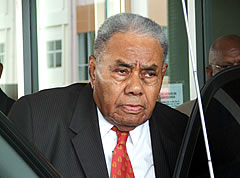
President, Ratu Josefa Iloilo has signed off a number of decrees over the past few days since the abrogation of the constitution, and it has been clearly stated that none of the decrees can be questioned or challenged in any of the Fiji courts.
The first decree is in relation to the abrogation of the 1997 constitution and its stated that in exercise of the powers vested in Ratu Josefa as the President and Commander in Chief of the Military, he decrees that all the decrees promulgated under his hand and seal shall be regarded as law and shall be observed and enforced.
Another promulgation is the Executive Authority of Fiji Decree. This promulgation deals with Ratu Josefa Iloilo appointing himself as the President of the Republic of the Fiji Islands. The President shall be the Head of State and Commander in Chief of the Military and Head of any government appointed under this decree.
This decree also states that until such time as a parliament is elected in accordance with a constitution yet to be adopted, the President shall have powers to appoint a Prime Minister by decree, to appoint other ministers on the advice of the Prime Minister, to make laws for the peace, order and good government of Fiji by decree acting in accordance with the advice of the PM and cabinet, and to exercise the executive authority of Fiji which is vested in the President.
It further states that "constitution yet to be adopted" means the full written constitution to be drawn up to replace the 1997 constitution, to be adopted by the people of Fiji in such manner
as the Government of Fiji may in the future determine.
This decree signed off by the President also states that no question as to the validity of this decree or any other decree shall be entertained by any court of law in Fiji.
President Iloilo has also promulgated the Fiji Existing Laws Decree, which is in force immediately before the 10th of this month, shall continue in force. Existing laws means all written laws other than the 1997 constitution in force immediately before the 10th of this month.
For the administration of government revenue and expenditure, President has also decreed the Revenue and Expenditure Decree 2009.
65 is retirement age for certain officers
The retirement age for the Commander of the Military Forces, Commissioner of Police, Supervisor of Elections, Commissioner of Prisons, the Auditor General and the Director of Public Prosecutions is 65 years.
The 65 years is stated in the State Services Decree promulgated by President Iloilo.
It also states that the people who hold the 5 positions holds office for any period upto 5 years and is eligible for re-appointment but they cannot be appointed or re-appointed when they turn 65.
Meanwhile the retirement age for the civil service, the Police Force and Prisons Service has been set at 55 years according to the new State Services Decree.
It said that any person employed in the civil service, Fiji Police and Fiji Prisons, who is already over 55 years, shall retire on the 30th of this month.
However, the decree also states that nothing in the section prevents, upon retirement, the continued employment of a person on a fixed term contractual employment, if his or her services are required in the government.
No Decree can be questioned in Court
Related Stories
We are committed to holding elections – Siromi Turaga
Questions were raised during Dialogue Fiji’s Constitution review discussion on whether the government can delay the general elections and complete the Constitution review however Acting Attorney General Siromi Turaga
Fijian economy on track to grow for fourth consecutive year in 2025 by 3.4%
The Fijian economy is on track to grow for the fourth consecutive year in 2025 by 3.4 percent, following a 3.5 percent expansion in 2024. The growth forecast is revised up marginally from the 3.2 percent projected

Heavy Rain Alert for Eastern Viti Levu, Southern Bua, Cakaudrove, Taveuni and maritime areas
A heavy rain alert is now in force for the eastern half of Viti Levu (Navua–Suva–Nausori to Serua–Namosi to Tailevu–Naitasiri–Ra areas), southern Bua, Cakaudrove, Taveuni and nearby smaller islands, the Lau an

We need to dismantle criminal enterprises, hitting them where it hurts most - Speaker
Speaker of Parliament, Filimone Jitoko has highlighted during the opening of the Office of the Director of Public Prosecutions Conference that there is a need for prosecutors in the country to master the digital frontie
Fiji has learned from its past and we know that restricting media engagement or access is not the answer - Tabuya
At all times, the public interest in accessing information and the media’s role in scrutinising government must outweigh any unilateral power to silence or sideline a news outlet. In Fiji, we uphold the principle that
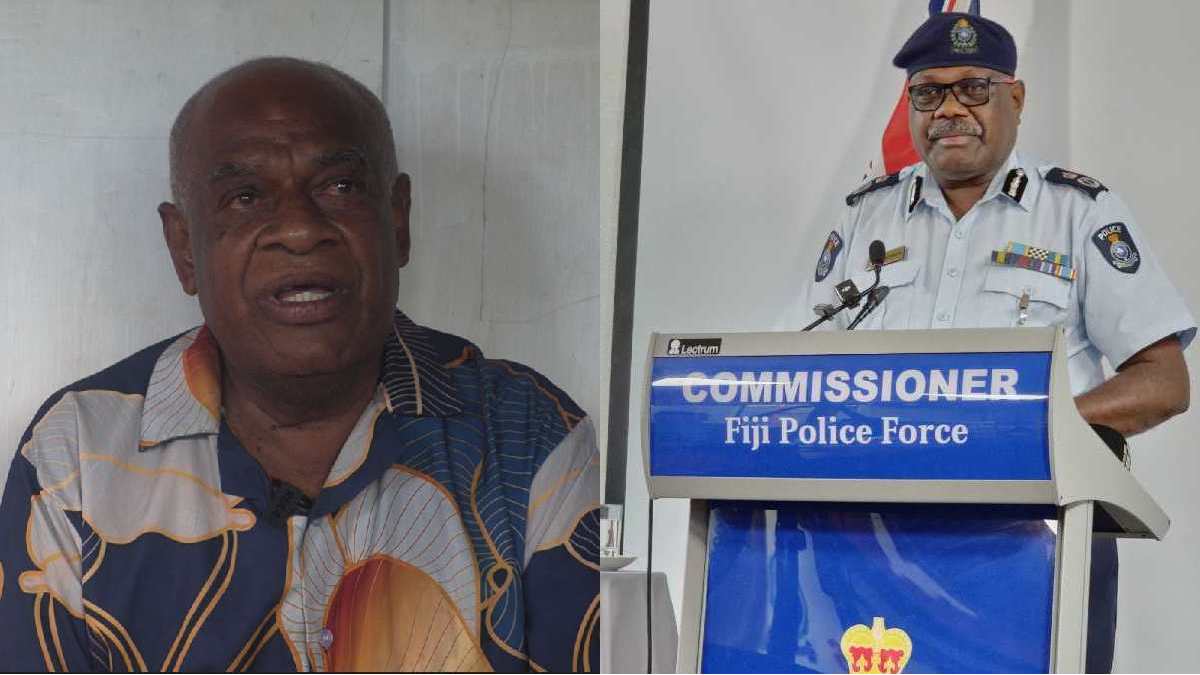
Wailea resident raises concerns about drug issues raised countless times with Police while COMPOL says official complaint must be lodged
Wailea Settlement Community leader, Inoke Utona says he has raised the issue of drug use and dealing in their area countless times with the authorities but there has still been no response from Police. However when