
May 14th, 1987, the first coup in Fiji when the third ranked officer in the Fiji Military Forces, Colonel Sitiveni Rabuka overthrew the Doctor Timoci Bavadra-led Labour and NFP coalition government.
Today marks 21 years since the first military coup. A lot has happened since then.
The then Colonel Rabuka, who ousted the Bavadra government, about one month after they won the elections, has publicly said that he regrets what he did in 1987 and apologised to the people of Fiji.
Rabuka said he has grown over the years but that he had to take action on this day, 21 years ago, to protect Fiji.
“While, as far as I am concerned, to prevent the disturbances and widespread violence that could have occurred, may I just add that the actions of 1987 can never be justified. It can never be legitimized. It was illegal and will remain illegal and any person who has not learned from that has been a copy cat rather than learning from previous mistakes and things we should have all learned from.” Maj Gen. Sitiveni Rabuka
The 1987 coup leader - who revealed in his book Rabuka Of Fiji that he was influenced by key people from the Alliance Party, which had lost the 87 Elections, to carry out the coup - maintains his stand.
“As I said in the book, those that influenced me – one of them tried to take the publishers to court – The book (was) published by the Central Queensland University Press. But nothing came of it so no one pursued that matter. They could not deny the allegations I made. “ Maj Gen Sitiveni Rabuka
76-year-old Harish Sharma, who was the Deputy Prime Minister in the ousted government of 1987, was sitting next to the late Doctor Bavadra in the Parliament House at Government Buildings on that day.
Speaking from Sydney, Sharma told Fijivillage that he would never forget the date of May 14th and what happened on that day 21 years ago.
“I was sitting next to the Prime Minister and next to me was Mr. Reddy, the Attorney General. And as the starter was giving his speech - and I think he was saying that a power comes from the people, not from the party or something to that effect - Sitiveni Rabuka who was sitting in the audience, closer to the Speaker said : “Mr Speaker, this is a military takeover.”
“And then he addressed the Prime Minister and he said “Prime Minister, walk out with your people”. Dr. Timoci Bavadra resisted and Jaram (Reddy) said, “PM you should walk out.” And we did. And we were shepherded like a flock of sheep into a truck – in fact there were two army trucks waiting for us. And we were pushed in there, curtains were drawn and it was completely dark and we were driven off.
“For a while we did not know where we were going. We were being driven towards Queen Elizabeth Barracks. And then there was a very small room in which we were sequestered. Some people suggested Dr Bavadra should be given a chair and finally our wish was granted and he was sitting there. I’m told I was the first person to ask for a glass of water. I don’t remember, but that’s what my friends have told me. “
Harish Sharma who was the Deputy Prime Minister in the ousted government of 1987
Sharma also said that although they were the democratically elected government, they were still helpless and could not come back into power.
“It was very difficult. It was almost impossible. We were defenceless and all the communication centres had been taken over. It was now impossible to come back into power. We did what we could. And the friendly countries said they would not send any physical intervention. We tried to seek the assistance of Her Majesty, you may remember, and she refused to give audience to Dr. Bavadra because her representative in Fiji at the time was, from memory, Ratu Penaia. So apart from internal agitation, and that was one of the biggest I have seen, from all sections of the community – there was no outside assistance coming.
“Finally, Rabuka and the coup makers established themselves. Of course they also had support from some very eminent politicians as Rabuka lately said that his coup was supported by politicians and I’m inclined to believe that.
Harish Sharma who was the Deputy Prime Minister in the ousted government of 1987
Kenneth Zinck, who was 28-years-old when the first coup occurred in 1987, said the activists fought hard to restore democracy and added that it was sad to see that Fiji had continued to witness coups – one 13 years after 1987 and another, 6 years after the 2000 coup.
“We were deeply saddened at the rate of democracy in 1987, May 14th. I was one of the activists then. And I still think I’m still an activist now. I don’t think things have changed from then.
“A coup is a coup and a coup is always wrong. It doesn’t matter what motives behind the coup are. The fact that an elected government is being ousted by the gun is, in fact, morally and legally wrong. And we fought for democracy in those days in 1987.” Kenneth Zinck
Zinck also recalled that the current Interim Attorney General was with them in the Back to Early May Movement in 1987 fighting for democracy and opposing the takeover. He said he and Aiyaz Sayed-Khaiyum were also locked up at the Central Police Station in 1987.
The Foreign Affairs Minister in the Bavadra government, Krishna Datt said the indigenous Fijians were led by politicians to believe during the 1987 coup that Fiji was only for the Fijians and Indians had taken over Fiji.
Datt believes that race was never the main reason for any of the coups in Fiji.
“I would say that this is one of the legacies of this country, of course, and I think politicians are the only people who use this rhetoric to get people on their side. And they constantly play, what they call, the race card.
“It was visibly shown to them that these are Indians leading it. Well, I’ll put to you the 2006 scenario – if you look around, if you hear the voices speaking, about the regime. Initially, it was mostly just Indian voices coming through, Indian faces being portrayed. They hear Indians being appointed. They hear Indians being placed in crucial places. This would be even more dangerous from that point of view. But as I’ve been arguing – these are political rhetorics. I don’t subscribe to them. I think the real motives for these things are different. They have to do with individuals – whether they come from Indians
or Fijians. That’s a secondary matter – I don’t think these people come here because they’re Indians or Fijians - but because they’ve got some personal vested interest.”
The Foreign Affairs Minister in the Bavadra government, Krishna Datt
Coup Culture Eradication Difficult Publish date/time: 14/05/2008 [12:04]
The 1987 coup leader Sitiveni Rabuka said while the proposed People's Charter is aimed at eradicating the coup culture in Fiji, it would be difficult.
Rabuka said with the perpetrators of the December 2006 takeover involved in the process, he does not know if things will work out as expected.
“It’s a noble aim, a noble desire. It’s difficult for one perpetrator of a coup to try an end a coup or coup culture.” Former PM and 1987 Coup Leader Maj. Gen. Sitiveni Rabuka
However, Rabuka said dialogue can take place with all the political parties to ensure that a condition is attached for immunity to be granted to those involved in the 2006 takeover, when parliament sits after the next elections.
He revealed that he had put the condition on the granting of immunity on the table before handing back power.
“It’s not difficult to do. It can be done by Parliament, and there is still that course of action if all the parties agree to resolve it through a parliamentary act. There was no constitution in place. I had abrogated the Constitution. So I made sure as the leader of the group, that all those who agreed with me or who were in the activities with me, were granted immunity – that was my responsibility as their leader.
“So I made sure that they put that as a condition when we handed back leadership to civilian government in December of 1987. We had made sure that part of their acceptance of that leadership would be the granting of immunity to the soldiers and all others who were involved in the activities of 1987.” Former PM and 1987 Coup Leader Maj. Gen. Sitiveni Rabuka
The State Minister for Rural Development in the Bavadra led government in 1987, Temo Sukanaivalu said the statements being made that the People's Charter would ensure that there were no more coups in Fiji, are misleading.
Sukanaivalu said no one knows what the future commanders of the Republic of Fiji Military Forces would do.
“The present Prime Minister, the Interim Prime Minister is not going to be in command of the military forever. There’s a limit for everything and one day he’s going to go. How are we to ensure that his successor is not going to stage another coup in future? NO! We can’t - because you can only stage a coup in this country when you have arms. If you don’t have any arms you can’t stage a coup.” The State Minister for Rural Development in the Bavadra-led government Temo Sukanaivalu.
Meanwhile Sukanaivalu said he would never forget the date May 14th, 1987 - as he also turned 40 that day.
“I was never scared. I’m a former Police Officer and I’m used to arms. And when I saw them coming in - Mr. Rabuka entered Parliament first, and he sat in the gallery and not long after that the soldiers came in with balaclavas and pistols and I thought,” if I’m going to do something somebody’s going to be killed”. And my mind was focused on my family too – if I do something, I may be shot and my family would be in limbo. So I sat there and watched Rabuka giving the order to Dr. Bavadra to go outside. The only other minister who retaliated was Dr Tupeni Baba. He said: “No! Stay put! Let them do what they want to do!” But then I think Dr. Bavadra wasn’t firm enough at the time and he said: “No, let’s go.” The State Minister for Rural Development in the Bavadra-led government Temo Sukanaivalu
Rabuka Blamed For Taking Fiji Backward 14/05/08 13.25
Doctor Tupeni Baba who was with the Labour Party in 1987 but is now with the SDL Party, said Fiji would have been a much better place if Rabuka to not bring evil to the nation.
“It is sad that we now have four coups and this has been in terms of the lives of the people, the economy and the level of quiet suffering of our general members of the public. If it were not for the events of 1987, particularly not for Colonel Rabuka’s actions we wouldn’t be here. The act by Rabuka – although he may blame the political leaders at the time, the leader of the Alliance Ratu Sir Kamisese Mara and the council of chiefs who supported his actions immediately afterward – he probably wouldn’t have done it. But I say he has to be fully blamed for what he did – irrespective of the support of those behind it. He should have served his life sentence but he was given a reprieve. If I were Sitiveni Rabuka I would spend the rest of my life doing free work for the people of Fiji for the evil that he did in 1987.” Former Labour Party member Tupeni Baba.
The Foreign Affairs Minister in the Bavadra led government in 1987, Krishna Datt stressed that things should always be done through democratic means and no coup can be good for a country.
“I think what is more relevant for us is not for us to continue to reflect on what we might have learnt from 1987. Obviously we haven’t learnt anything from 1987. It is to try and see what have been the justifications for the present coup. This is the unfortunate thing – I don’t think we’re learning at all. From my point of view, there is no reason for conducting a coup to bring about changes in society. If there were legitimate changes to clean up a government, to bring about good governance, to clean up democracy in a way - there are instruments within democracy that can allow you to do this.
“ In my view a coup is a coup is a coup is a coup. Whenever it happens it is wrong. There are other alternative ways which can be used to resolve any issues that may arise within a country.” Foreign Affairs Minister in the Bavadra-led government Krishna Datt.
Datt also said the fact remains that the Fiji Labour Party which was the victim of the 1987 coup is now part of the interim administration.
“In 1987 when the coup happened, the leader was the Bavadra Government Including Bavadra, myself, Dr. Baba, the present Finance Minister Mahenra Chaudhry . We sort of went around the world telling the whole world what a nasty thing this is and what has happened and how this is going to undermine democracy.
“And it would appear to me to be wrong in principal, from the Labour Party’s point of view, to cooperate with the any such regime in that manner. Bringing democracy back in the way that we did in 1987 is the way I would’ve chosen – to work outside the regime and to bring that in and not to go within the regime because that’s a big difference.
“And now for people to do fast footwork and say “I’m appointed by the president” or that “my job here is to bring back democracy” is wrong. “Foreign Affairs Minister in the Bavadra-led government Krishna Datt.
And Fiji Labour Party leader and the current Interim Finance Minister has said that he had to answer the call of duty from the President Ratu Josefa Iloilo.
In a recent interview with Fijivillage News, Chaudhry said the FLP never supported the events of December 2006 but decided to join when executive powers were returned to the President.
FV: Mr Chaudry, statements have been made, questions raised about how you – a person who was ousted in two coups (in 1987 and 2000) – decided to come on board after the events of December 2006. What made you make that decision, when you’ve always fought for the restoration of parliamentary democracy?
MC: “The first one was a military coup – like the 2006 one - When this event happened, you will recall that the Labour Party stated its opposition to it. And at the same time, we said we would be willing to restore democracy provided executive authority was handed back to His Excellency, the President. We were not going to take part in an administration which was headed by the military. It was conditional. “Having experienced four coups, I knew that there was no going back – it was a military coup. I experienced it in 1987. When it’s a military coup – there’s no going back and I then decided that we would have to see this through for the country because the military was not going to give up. The military had taken that step it was important that those of us who could assist in the process of restoring democracy – if asked to serve - should have ventured forth. I did not apply. I answered the call of the president when I was asked. “
May 14th, 1987: 21 Years Since First Coup
Related Stories
We are committed to holding elections – Siromi Turaga
Questions were raised during Dialogue Fiji’s Constitution review discussion on whether the government can delay the general elections and complete the Constitution review however Acting Attorney General Siromi Turaga
Fijian economy on track to grow for fourth consecutive year in 2025 by 3.4%
The Fijian economy is on track to grow for the fourth consecutive year in 2025 by 3.4 percent, following a 3.5 percent expansion in 2024. The growth forecast is revised up marginally from the 3.2 percent projected

Heavy Rain Alert for Eastern Viti Levu, Southern Bua, Cakaudrove, Taveuni and maritime areas
A heavy rain alert is now in force for the eastern half of Viti Levu (Navua–Suva–Nausori to Serua–Namosi to Tailevu–Naitasiri–Ra areas), southern Bua, Cakaudrove, Taveuni and nearby smaller islands, the Lau an

We need to dismantle criminal enterprises, hitting them where it hurts most - Speaker
Speaker of Parliament, Filimone Jitoko has highlighted during the opening of the Office of the Director of Public Prosecutions Conference that there is a need for prosecutors in the country to master the digital frontie
Fiji has learned from its past and we know that restricting media engagement or access is not the answer - Tabuya
At all times, the public interest in accessing information and the media’s role in scrutinising government must outweigh any unilateral power to silence or sideline a news outlet. In Fiji, we uphold the principle that
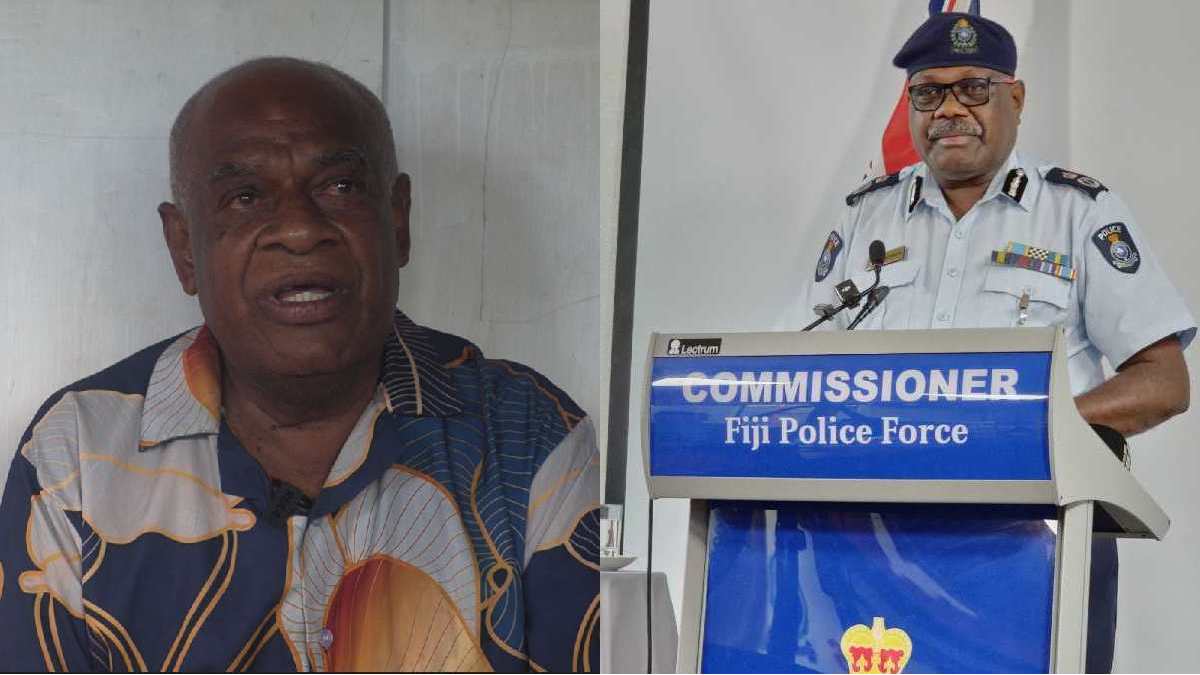
Wailea resident raises concerns about drug issues raised countless times with Police while COMPOL says official complaint must be lodged
Wailea Settlement Community leader, Inoke Utona says he has raised the issue of drug use and dealing in their area countless times with the authorities but there has still been no response from Police. However when