
Questions have been raised on why the Interim Prime Minister has not come to court to give an undertaking that he will allow the constitutional process to take course if a decision by the Appeals Court is made against them.
Representing Laisenia Qarase, QC Brad Walker highlighted that the former Prime Minister had given an undertaking in the High Court in the Chandrika Prasad case that if the decision is made against them, they would step aside and allow the constitutional process to take its cause to return Fiji to democracy.
He said such an undertaking would ensure that no matter what the decision of the court and if relief of some sort is granted to his clients, the Commander would adhere to the ruling and follow the courts directive.
Walker also stated earlier today that the President's decision to confirm, validate and ratify the acts between December 2006 and January 5th 2007 by the Commander and the RFMF was done upon the advice given, which was false, pretended and unlawful.
He highlighted that the usurper himself, being the Commander, provided such advice to the President, which was illegal and criminal.
Walker then went on to question the reasons as to why the current regime is called an interim asking where is the end point as no elections have taken place as required under the 1997 Constitution.
He said the Commander continues to say that he continues to uphold the Constitution and has not abrogated it, is nonsense and the court must give some relief to ratify the current situation.
Walker stressed to the judges that the Court must not look at problems which may arise if declarations are made but stick to the law and what it says.
He suggested that if it was decided that the acts were illegal, then there has to be a matter of trust that the decisions would be accepted by the Commander and it is a risk that the Constitutional Court must take.
Walker said the Court cannot be deterred from exercising its discretion to grant relief by considering what may happen.
He said if the Commander is then chosen again as the Interim PM, then it would be lawful but he would find some other emergencies to delay the election process and it is for the court to stop this.
In his submissions, State lawyer Gerard McCoy stressed that the issue at hand is determining the existence of the prerogative powers of the President and that there is no possibility for a court to give an undertaking as relief, to compel the President to do something.
McCoy said that the Constitution itself does not compel the President to take any advice, then neither can the Courts.
He said the reality in Fiji is that the Boundaries Commission is still undertaking its work and due to the financial constraints, elections could not possibly be held in the current circumstance.
The Case continues this hour.
Lawyers want assurance from Commander
Related Stories
We are committed to holding elections – Siromi Turaga
Questions were raised during Dialogue Fiji’s Constitution review discussion on whether the government can delay the general elections and complete the Constitution review however Acting Attorney General Siromi Turaga
Fijian economy on track to grow for fourth consecutive year in 2025 by 3.4%
The Fijian economy is on track to grow for the fourth consecutive year in 2025 by 3.4 percent, following a 3.5 percent expansion in 2024. The growth forecast is revised up marginally from the 3.2 percent projected

Heavy Rain Alert for Eastern Viti Levu, Southern Bua, Cakaudrove, Taveuni and maritime areas
A heavy rain alert is now in force for the eastern half of Viti Levu (Navua–Suva–Nausori to Serua–Namosi to Tailevu–Naitasiri–Ra areas), southern Bua, Cakaudrove, Taveuni and nearby smaller islands, the Lau an

We need to dismantle criminal enterprises, hitting them where it hurts most - Speaker
Speaker of Parliament, Filimone Jitoko has highlighted during the opening of the Office of the Director of Public Prosecutions Conference that there is a need for prosecutors in the country to master the digital frontie
Fiji has learned from its past and we know that restricting media engagement or access is not the answer - Tabuya
At all times, the public interest in accessing information and the media’s role in scrutinising government must outweigh any unilateral power to silence or sideline a news outlet. In Fiji, we uphold the principle that
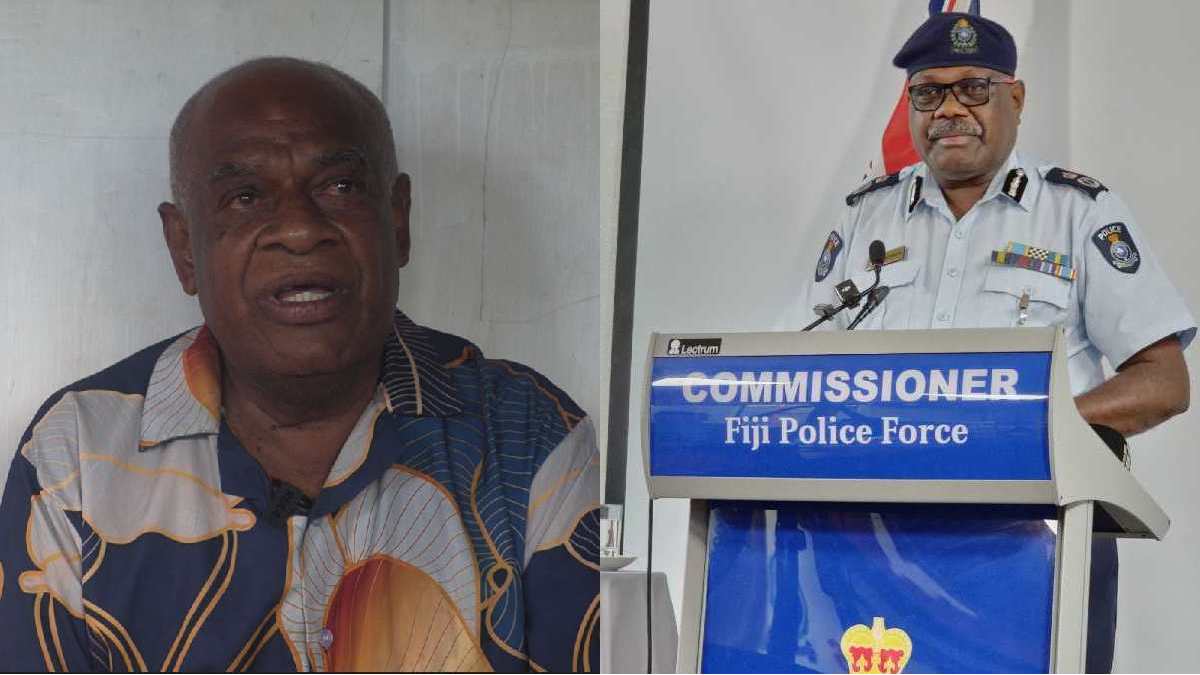
Wailea resident raises concerns about drug issues raised countless times with Police while COMPOL says official complaint must be lodged
Wailea Settlement Community leader, Inoke Utona says he has raised the issue of drug use and dealing in their area countless times with the authorities but there has still been no response from Police. However when