With reduced sugar production, it has now been confirmed that the Fiji Sugar Corporation is not expected to meet all its supply commitments to the buyers for the next 12 months.
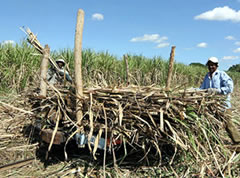
In the current 2010 crushing season, cane growers are expected to supply to FSC a total of 1.85 million tonnes of cane from which approximately 133,766 tonnes of sugar is expected to be produced.
FSC sells sugar to the European Union under the new regional Economic Partnership Agreements that has come into effect from 1st October last year and is effective until September 30th 2015.
Under the agreement, FSC said the minimum regional safeguard threshold for the Pacific Region is 181 thousand 570.5 tonnes of white sugar and is expected to increase to 210,000 tonnes of sugar from next year to 2015.
Fiji and Papua New Guinea are the two countries under the Pacific Region.
Fiji is likely to export the entire quantities for the Pacific Region threshold.
FSC Chief Executive Deo Saran has already revealed that to increase cane production and supply, FSC has initiated a Cane Development Program and it is anticipated that with favorable weather conditions, 6 thousand hectares of idle land would be brought under cultivation by mid November this year.
FSC is also awaiting other initiatives like the Land Reform Program, which will make more land available for cane farming.
As reforms and plans for restructure in the industry continues, the reality also remains that sugar production continues to decline with 167,611 tonnes of sugar produced last year compared to 207,911 tonnes produced in the previous season.
FSC has incurred significant losses during recent years.
During the year ended 31st May 2010, the Corporation incurred a loss of $175.1 million compared to the $36.8 million loss in 2009.
In 2010 the total loss includes the impairment loss on property, plant and equipment of $173.4 million.
The next 12 months will also be challenging for the FSC as it has significant debt repayment commitments amounting to over $60 million.
The Corporation will require significant funding to meet its working capital requirements, capital expenditure and fund the operating losses.
The total funding requirements for the current financial year ending 2011 and 2012 is projected to be around $170 million.
Story by: Vijay Narayan