
As investigations commence into alleged abuse of office against certain former board members and senior executives of Airports Fiji Limited, the Auditor General has made it clear that the former AFL board should explain its actions for defying government directives and not obtaining competitive quotations.
The latest AG report which is now being scrutinized by FICAC and the police, states that on November 26th 2003, the AFL Board had approved the upgrading of the CEO's official residence in Namaka and awarded the tender to Baycorp Holdings Limited at a cost of $140,000 with no allowance for variations.
In addition a budget of $57,000 for new furniture and white goods was also approved.
However, on 3rd December, 2003, the Ministry of Public Enterprises wrote to the Executive Chairman of AFL, Viliame Leqa expressing concern on the board's decision to upgrade the CEO's residence especially when renovations costing $90,000 were carried out in the same residence in 1999. The Ministry requested the board to seriously consider payment of reasonable housing allowance to the future CEO instead of wasting huge amounts of money in renovations and outfitting the quarters of the CEO. Despite this warning, a further $10,000 was approved for refurbishing the kitchen at the residence. It was also ascertained that selective tenders were called and the actual expenditure incurred on the renovations exceeded the original approved sum of $197,000 by $27,668.
It was also revealed that although the board approved a sum of $57,000 for purchase of furniture and white goods, competitive quotations were not obtained. It was also not possible to ascertain that the purchases were made from the most economical source. In addition, in most cases arrangements for the purchases were made by the CEO's wife, Imrana Jalal who later requested the then CEO, Ratu Sakiusa Tuisolia to make the necessary payments.
However, the AFL management said these allegations leveled against the former board and CEO is only to discredit them. It said that proper tender procedures were followed and the CEO had no role in the awarding of the tender in relation to the upgrading of the home.
It further states that furniture and white goods were purchased at a cost of $52,471 which was below budget and specific furniture and white goods were purchased to suit the theme of the house and were obtained on competitive quotations.
The AFL management also states that the CEO's wife chose the furniture and white goods because she had good and excellent taste and provided value and quality for the prices paid. She also gave her services for free.
Explain your actions-Auditor General
Related Stories

We are committed to holding elections – Siromi Turaga
Questions were raised during Dialogue Fiji’s Constitution review discussion on whether the government can delay the general elections and complete the Constitution review however Acting Attorney General Siromi Turaga
Fijian economy on track to grow for fourth consecutive year in 2025 by 3.4%
The Fijian economy is on track to grow for the fourth consecutive year in 2025 by 3.4 percent, following a 3.5 percent expansion in 2024. The growth forecast is revised up marginally from the 3.2 percent projected

Heavy Rain Alert for Eastern Viti Levu, Southern Bua, Cakaudrove, Taveuni and maritime areas
A heavy rain alert is now in force for the eastern half of Viti Levu (Navua–Suva–Nausori to Serua–Namosi to Tailevu–Naitasiri–Ra areas), southern Bua, Cakaudrove, Taveuni and nearby smaller islands, the Lau an

We need to dismantle criminal enterprises, hitting them where it hurts most - Speaker
Speaker of Parliament, Filimone Jitoko has highlighted during the opening of the Office of the Director of Public Prosecutions Conference that there is a need for prosecutors in the country to master the digital frontie

Fiji has learned from its past and we know that restricting media engagement or access is not the answer - Tabuya
At all times, the public interest in accessing information and the media’s role in scrutinising government must outweigh any unilateral power to silence or sideline a news outlet. In Fiji, we uphold the principle that
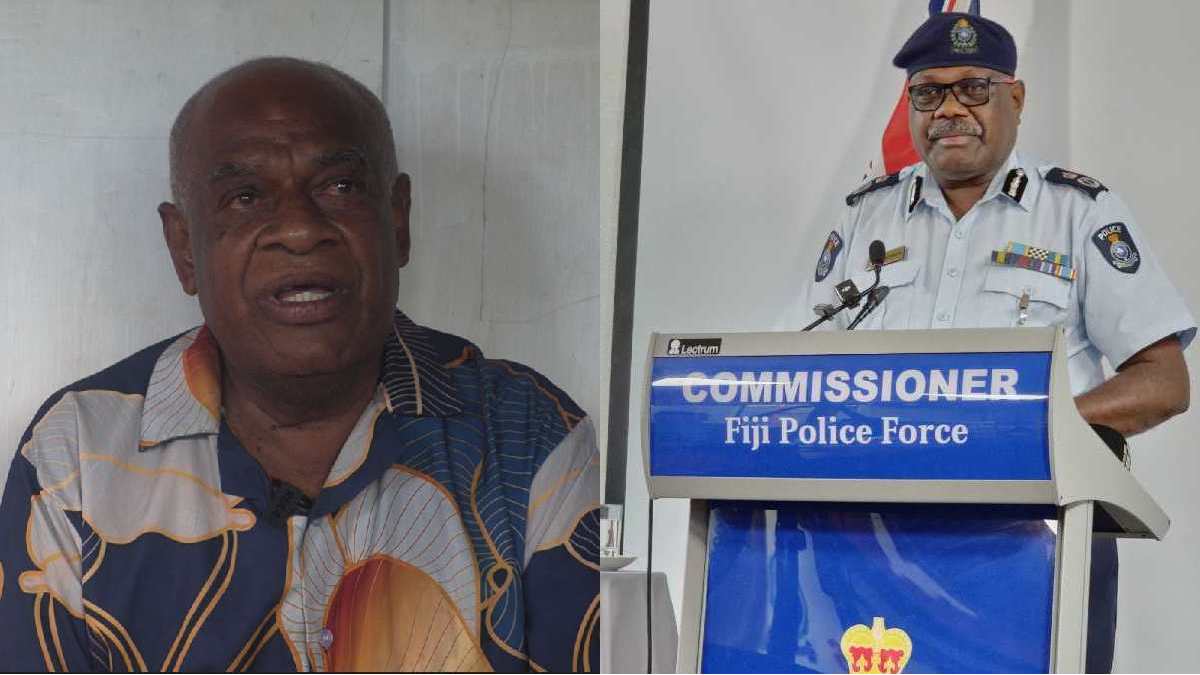
Wailea resident raises concerns about drug issues raised countless times with Police while COMPOL says official complaint must be lodged
Wailea Settlement Community leader, Inoke Utona says he has raised the issue of drug use and dealing in their area countless times with the authorities but there has still been no response from Police. However when