
FICAC senior counsel Michael Blanchflower in the Laisenia Qarase Fijian Holdings trial today objected to questions raised by Qarase’s lawyer that it was not unfair to indigenous Fijians how the FHL shares were allotted in the early 1990s.
Qarase’s counsel Tupou Draunidalo questioned FICAC witness and former FHL CEO Sitiveni Weleilakeba whether he thought it was unfair to other indigenous Fijians when his company Stiks Investments applied for 150,000 Class A shares in FHL.
Weleilakeba said that he took the opportunity to invest when it was offered to him.
He went on to say that at the time, FHL was well known in the indigenous Fijian community and the opportunities at FHL were well known to the community.
Upon questioning, Weleilakeba also said that the option to take a loan from the Fiji Development Bank to purchase shares was also well known to the indigenous Fijians.
However, Blanchflower objected to Draunidalo’s question to Weleilakeba that this would mean that the allotment of shares were not unfair to the community.
Blanchflower said Weleilakeba cannot speak about fairness or unfairness to the indigenous Fijian community as people would think differently on this issue.
Story by: Vijay Narayan
Earlier today:
Qarase did not own shares in the 3 companies
Former Prime Minister Laisenia Qarase’s lawyer has confirmed in the Fijian Holdings High Court trial that she will present some FHL directors in the early 1990s as witnesses who will confirm that Qarase verbally declared his interest with the companies listed in the charges against him.
While cross examining FICAC witness and former CEO of FHL Sitiveni Weleilakeba today, Qarase’s counsel Tupou Draunidalo put to him that Qarase verbally declared his interest in Cicia Plantation Co-op Society Limited, Q-Ten Investments and association with Mavana Investments Limited prior to decisions made by the FHL board.
Weleilakeba said if the declaration is not in the minutes of the FHL board meetings, then it was not made.
He said the directors also had time to correct the minutes in the following meeting.
Draunidalo then questioned Weleilakeba whether he can recall or heard during the FHL board meetings that the late former FHL chairman Lyle Cupit told Qarase not to speak or vote when discussions took place on the application of the shares for Cicia Plantation Co-op, Q-Ten Investments and Mavana Investments.
Weleilakeba replied that he cannot recall Cupit saying that and it would have been recorded in the minutes.
Upon questioning, Weleilakeba also confirmed that after his company searches conducted for applicants of Class A shares at the time, Qarase did not own any shares in Cicia Plantation Co-op Society Limited, Q-Ten Investments and Mavana Investments.
Weleilakeba also confirmed that the dividend returns for Class A shareholders were very attractive after Draunidalo asked him whether the dividends have returned the initial investments many times over.
The dividends for Class A shares at the time was set at 20 percent a year while Class B shareholders received no dividends.
There were several documents shown to Weleilakeba where FHL dividend payments were made to Cicia Plantation Co-op Society, Q-Ten Investments and Mavana Investments.
At the same time according to the arrangement at the time, part of the dividends of these companies was payable to the Fiji Development Bank as the companies had purchased the FHL shares by taking loans from FDB.
Weleilakeba also confirmed that Qarase was not a shareholder of any of these three companies at the time of the application of the shares.
Another document dated November 3rd 1993 was then presented by Draunidalo which showed the special resolutions of the FHL AGM.
Weleilakeba confirmed that the presence of all shareholders including FAB was necessary and in that AGM, all the companies allotted FHL shares to that date including Cicia Plantation, Q-Ten Investments and Mavana Investments were ratified by the shareholders in attendance.
Copies of some FHL cheques were also presented by Draunidalo which showed only Weleilakeba signing the cheques although the signatories were him and two directors.
Weleilakeba looked at the cheques and confirmed that only his signature was on them.
He was also questioned on the 150,000 Class A FHL shares he previously owned under a company called Stiks Investments with his former wife Kelera Uluiviti.
Weleilakeba confirmed that 80 percent of the purchase of the shares was funded through a FDB loan.
Upon questioning, he also said that he analyzed the application for Stiks Investments and submitted it to the board for approval.
However, he said that he had declared his interest.
Meanwhile, Qarase is charged with six counts of abuse of office and three counts of discharge of duty with respect to property in which he has a private interest.
It is alleged that Qarase applied, and then facilitated and allowed the purchase of Class A FHL shares for certain companies when he was director of FHL, financial advisor of the Fijian Affairs Board and advisor to the Great Council of Chiefs.
The case will resume before Justice Priyantha Fernando at 9.30am tomorrow.
Story by: Vijay Narayan
Allotment of shares was a collective decision says Weleilakeba
The allotment of shares to Q-Ten Investments, Cicia Plantation Co-op Limited and Mavana Investments Limited was a collective decision of the Fijian Holdings Limited board and not the decision of only one director, Laisenia Qarase alone.
Former CEO of FHL Sitiveni Weleilakeba confirmed this while answering questions by defense counsel Tupou Draunidalo this afternoon in Qarase’s FHL trial.
Weleilakeba said the FHL directors also included the Minister of Finance, Minister of Fijian Affairs and the Governor of Reserve Bank at that time.
He said Qarase was one of the nine directors in FHL.
He confirmed there was nothing in the Articles of Memorandum of FHL when it was a private company to restrict directors or executives from participating in board meetings that allotted shares to a company in which the director or executive had interest in.
He stressed that there was nothing in the Articles of Memorandum to restrict directors and executives of FHL to apply for shares on behalf of another entity.
Weleilakeba also mentioned that Qarase was absent from the meeting held on 31st December 1993 where FHL made a decision to pay out a 10 percent dividend of $746,465 dollars for Class A shares.
This interim dividend was paid out on April 1st 1994.
Weleilakeba confirmed that dividend cheques were only signed after board approval.
Story by: Ronal Deo
Blanchflower objects to question
Related Stories
We are committed to holding elections – Siromi Turaga
Questions were raised during Dialogue Fiji’s Constitution review discussion on whether the government can delay the general elections and complete the Constitution review however Acting Attorney General Siromi Turaga
Fijian economy on track to grow for fourth consecutive year in 2025 by 3.4%
The Fijian economy is on track to grow for the fourth consecutive year in 2025 by 3.4 percent, following a 3.5 percent expansion in 2024. The growth forecast is revised up marginally from the 3.2 percent projected

Heavy Rain Alert for Eastern Viti Levu, Southern Bua, Cakaudrove, Taveuni and maritime areas
A heavy rain alert is now in force for the eastern half of Viti Levu (Navua–Suva–Nausori to Serua–Namosi to Tailevu–Naitasiri–Ra areas), southern Bua, Cakaudrove, Taveuni and nearby smaller islands, the Lau an

We need to dismantle criminal enterprises, hitting them where it hurts most - Speaker
Speaker of Parliament, Filimone Jitoko has highlighted during the opening of the Office of the Director of Public Prosecutions Conference that there is a need for prosecutors in the country to master the digital frontie
Fiji has learned from its past and we know that restricting media engagement or access is not the answer - Tabuya
At all times, the public interest in accessing information and the media’s role in scrutinising government must outweigh any unilateral power to silence or sideline a news outlet. In Fiji, we uphold the principle that
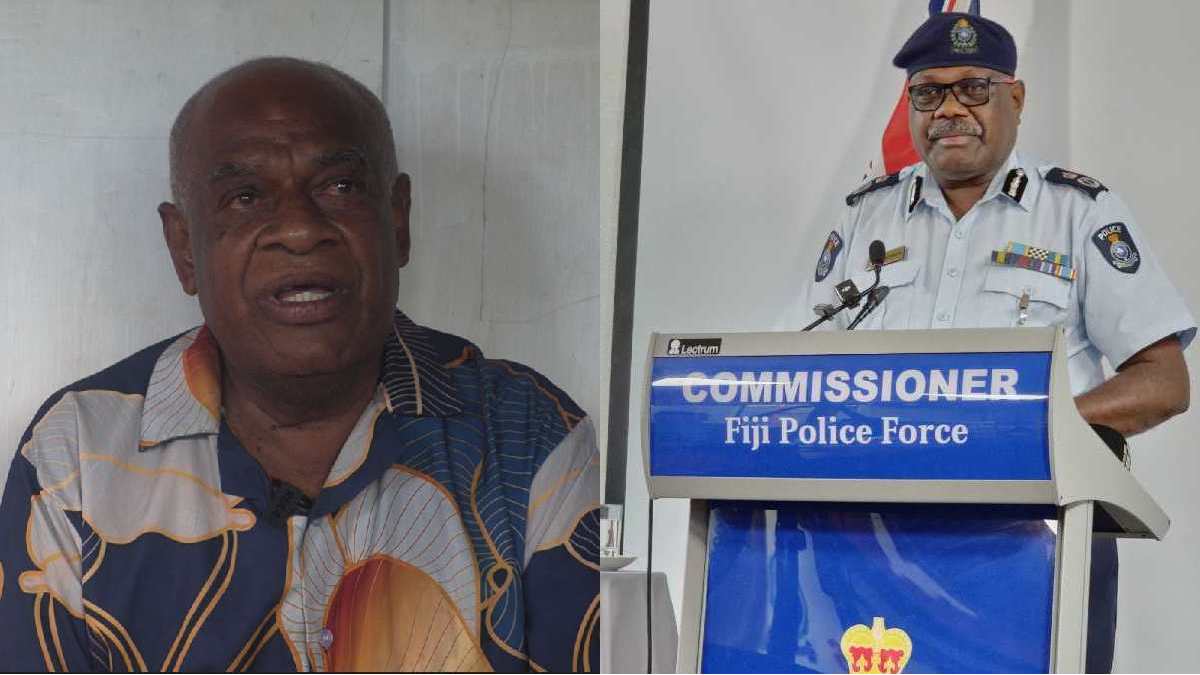
Wailea resident raises concerns about drug issues raised countless times with Police while COMPOL says official complaint must be lodged
Wailea Settlement Community leader, Inoke Utona says he has raised the issue of drug use and dealing in their area countless times with the authorities but there has still been no response from Police. However when