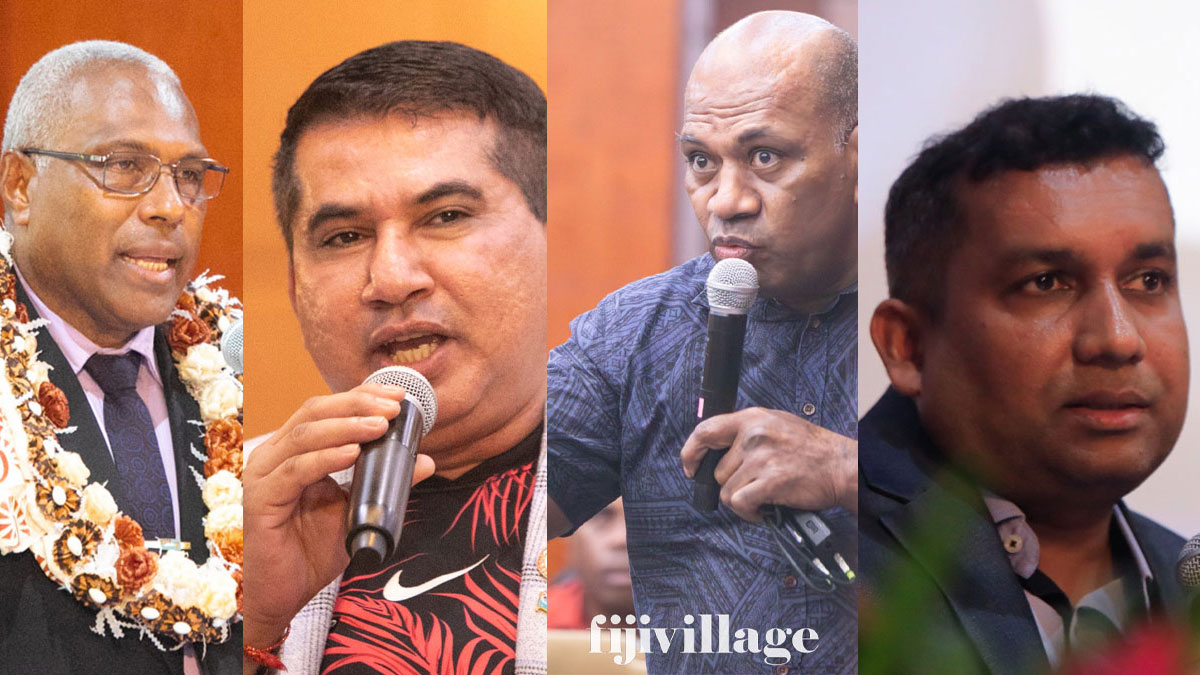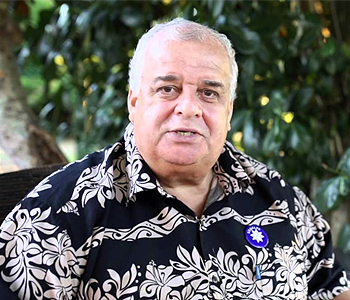
Government MP and member of the Parliamentary Standing Committee on Justice, Law and Human Rights, Balmindar Singh says there is no way the 2014 general elections could have been flawed as claimed by Mick Beddoes.
Mick Beddoes made the claim to the committee on behalf of a Nadi group that the election was compromised and the results did not reflect the will of the people.
Beddoes made claims that the presiding officers at four different polling stations were asked to call another number and not the number of the counting supervisors to submit the counts from the polling station.
He also claims that the electronic elections software was only introduced to the agents on the day of the counting.
Committee Chairman, Ashneel Sudhakar then asked Beddoes to submit a signed affidavit with this claim to the committee.
Beddoes says votes that were entered into the system by the first data entry staff could not be retrieved to be verified a second time and after a few attempts to retrieve the data the agents were told to move ahead with the rest of the counting.
He says 3 days after the announcement of the results were made on the 19th of September, truckloads of ballot papers arrived from the North at the Natovi Jetty and was received by the Supervisor of Elections Office.
Balmindar Singh then raised concerns that there are three ways of reconciliation of ballots and the election was not flawed.
Singh says the reconciliations were done by the total number of votes cast, total number of people registered at the centre and using the against the list method.
Beddoes then said he knew this subject will be raised.
The Multinational Observer Group report clearly stated that the 2014 election was credible.
The Observer Group states that the outcome of the elections broadly represented the will of the Fijian voters and the conditions were in place for Fijians to exercise their right to vote freely.
The Multinational Observer Group’s final report also states the election was enthusiastically embraced by the voters of Fiji, who were keen to participate in the democratic process.
The Group also observed that the election was conducted in an atmosphere of calm, with an absence of electoral misconduct or evident intimidation.
The group included observers from Australia, Canada, the European Union, India, Indonesia, Israel, Japan, the Melanesian Spearhead Group, New Zealand, the Republic of Korea, Russia, South Africa, Turkey, the United Kingdom and USA.