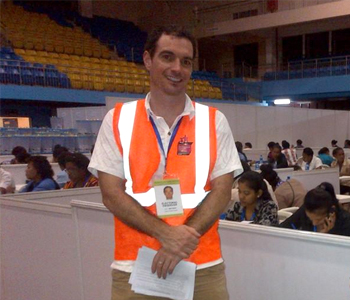
The Multinational Observer Group has stated that the outcome of the 2014 Fijian Election broadly represented the will of the Fijian voters and the conditions were in place for Fijians to exercise their right to vote freely.
The group’s final report stated the election was enthusiastically embraced by the voters of Fiji, who were keen to participate in the democratic process.
The Multinational Observer Group also observed that the election was conducted in an atmosphere of calm, with an absence of electoral misconduct or evident intimidation.
It also stated that despite a new, unfamiliar and complex voting system, the Fijian Elections Office administered the elections effectively.
The Multinational Observer Group findings stated the counting process, appeared well organised and thorough, both at polling stations and at the National Counting and Results Centre.
The report stated that they did not observe any significant irregularities in the counting process, but the progress of the count could have been better communicated to the public.
The group did observe some problems, particularly in voter registration, prepolling and postal voting, which stemmed at least in part from the short preparation time and miscommunication, especially related to prepolling.
It also stated that no challenges were submitted to the Court of Disputed Returns.
The Multinational Observer Group, co‑led by Australia, Indonesia, Papua New Guinea and India, has recommended in its final report on the 2014 General Elections that political party identification should be included on the National Candidates List.
The report also stated that consideration should be given to reducing requirements for party registration and activities.
It further said that public office holders, including trade union officers, should be allowed to be political party members.
They also recommend that the Public Order (Amendment) Decree should be revised to allow groups, including political parties, to gather without requiring a permit.
It also said that the national candidate numbers should be drawn earlier, to allow parties sufficient time to publicise these ahead of prepolling.
The Multinational Observer Group said that the effectiveness of the media to provide informed choice on Election Day varied greatly between the urban and rural areas.
It said voters in the urban areas had access to a reasonably diverse range of media.
As of September 2014, a total of 34 media outlets were officially registered under MIDA, including newspapers, magazines, radio stations, TV stations and social media.
It said that radio is the most important source of information for many Fijians and played a crucial role in distributing information about both the political and administrative aspects of the election.
The report said the coverage of the electoral campaign in the final weeks before the election included instances of both neutrality and partiality among the local media.
It said while efforts were made by some domestic media like Communications Fiji Limited and Fiji TV to allocate an equitable amount of airtime to the different candidates and political leaders through special election programs, some media organisations appeared to exhibit political biases.
The report further said that political parties were able to mobilise and candidates were able to campaign prior to the election.
It also mentioned the special talkback on CFL stations which featured FijiFirst Leader Voreqe Bainimarama and SODELPA Leader Ro Teimumu Kepa in a live debate three days before the election, which was broadcast widely on radio.
The group included observers from:
- Australia
- Canada (2)
- European Union (3)
- India (3)
- Indonesia (15)
- Israel (2)
- Japan (7)
- Melanesian Spearhead Group (5)
- New Zealand (11)
- Republic of Korea (2)
- Russia (3)
- South Africa (1)
- Turkey (1)
- UK (5)
- USA (10)