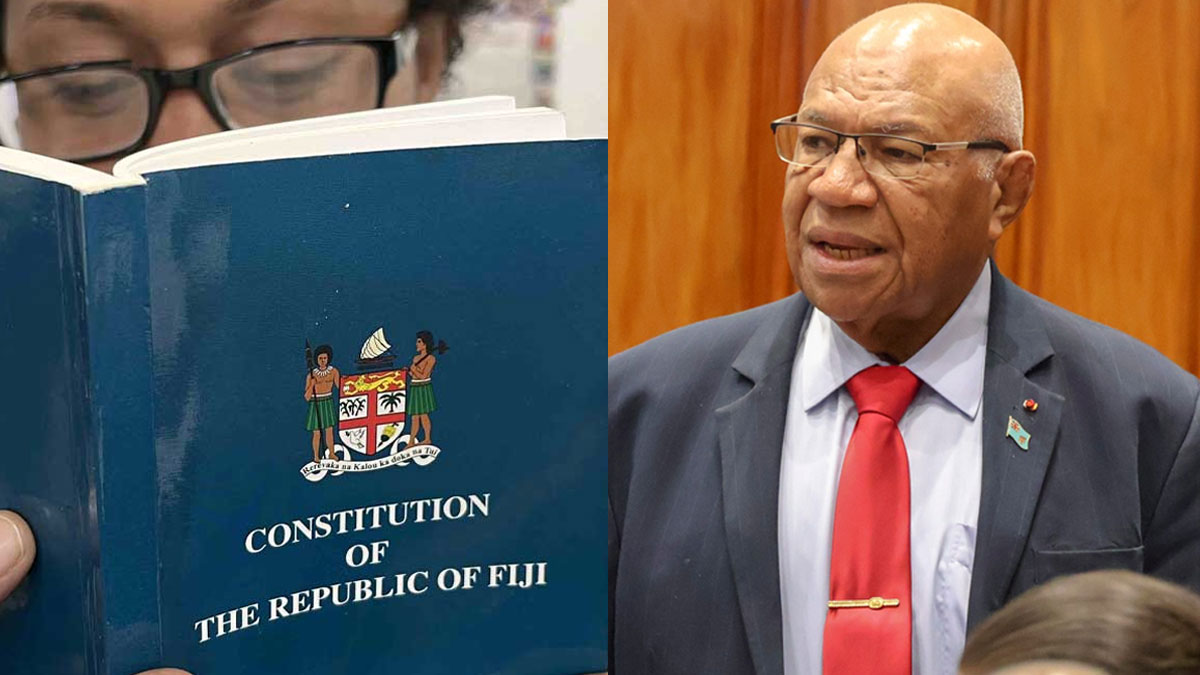
Debate on the Bill to amend the 2013 Constitution is now underway in Parliament after the proposed law was tabled for the second reading by Prime Minister, Sitiveni Rabuka this morning.
While speaking on the proposed amendments to the constitution, Rabuka says Section 2 simplifies the language of Chapter 11, allowing for greater clarity and adaptability in governance by removing outdated or restrictive provisions.
He says Section 3 enhances legislative efficiency by lowering the threshold for constitutional amendments from three-quarters to two-thirds of Parliament support, and removing the requirement for a nationwide referendum.
Rabuka says this ensures that amendments can be passed through elected representatives in Parliament, reflecting the democratic mandate while streamlining the decision-making process.
He stresses that by allowing constitutional updates to be made more efficiently, the amendment ensures that governance structures remain responsive to evolving national needs.
Rabuka says today is a special day – not just for the esteemed members of parliament, but for our entire nation.
He says he is saying this because the outcome of today’s debate on the Bill to amend the Constitution of the Republic of Fiji will shape the future of democracy, the future of our land, the destiny of our nation and, with it, the lives of our people.
The Prime Minister says the constitution is the supreme law of our land, the foundation upon which our democracy stands, yet, for a constitution to be legitimate, it must demonstrate the will of the people, echo their voices, embody their spirit and aspirations in its content, and reflect their dignity in shaping their own future.
However, he says the current 2013 constitution lacks this fundamental principle.
He says it was neither formulated nor adopted through a participatory democratic process to secure the people’s mandate.
Rabuka says if a constitution is to reflect the voice of the people, it must be born out of inclusive national dialogue, as seen in successful constitutional democracies worldwide.
He adds the bill before parliament is not merely a legal exercise – it is a moral and democratic necessity.
Rabuka says Fiji is still a very young nation – having only gained independence 54 years ago – and like any young nation, we are learning, growing, transitioning and refining our path as we move forward.
He says the great democracies of the world – those that have endured for centuries – did not impose their constitutions upon their people.
Rabuka says instead, their founding documents were carefully crafted by the people, for the people, through robust dialogue, consensus, with distinct commitment to freedom and justice.
The Prime Minister says constitutional reform should not be a partisan issue, and philosophers and ordinary citizens alike believe and have argued that the pathway to national unity is through bipartisanship.
Rabuka says as representatives of the people, it is their duty to engage in meaningful discussions, to listen to diverse voices, and to ensure that this process is transparent, accountable, and just.
Rabuka adds that the Constitution must be adaptative and able to be moulded to reflect the needs of its people.
He says ultimately, the Constitution remains a living document that responds meaningfully to Fiji's needs.
Rabuka says lowering the approval threshold strikes a balance between stability and adaptability, ensuring that the Constitution can be improved when needed while still maintaining a strong two-thirds consensus in Parliament.
He says this constitutional reform modernises the constitutional amendment process, making it more effective, democratic and upholds the tenets good government.
The Prime Minister says history will judge us not by the laws we inherit, but by the laws we shape for future generations.
He told the MPs that let them not be remembered as a Parliament that defended an unrepresentative constitution, let them be remembered as leaders who put democracy above politics, who embraced dialogue over division, and who gave the people the power to shape their own destiny.
He called on all parliamentarians to rise above party lines, act in the spirit of bipartisanship, and work together to build a Constitution by the people, for the people — one that truly reflects the ideals of democracy, justice, and unity. 37 parliamentarians from the government side and 4 from the Opposition had voted for the tabling of the Bill last week.
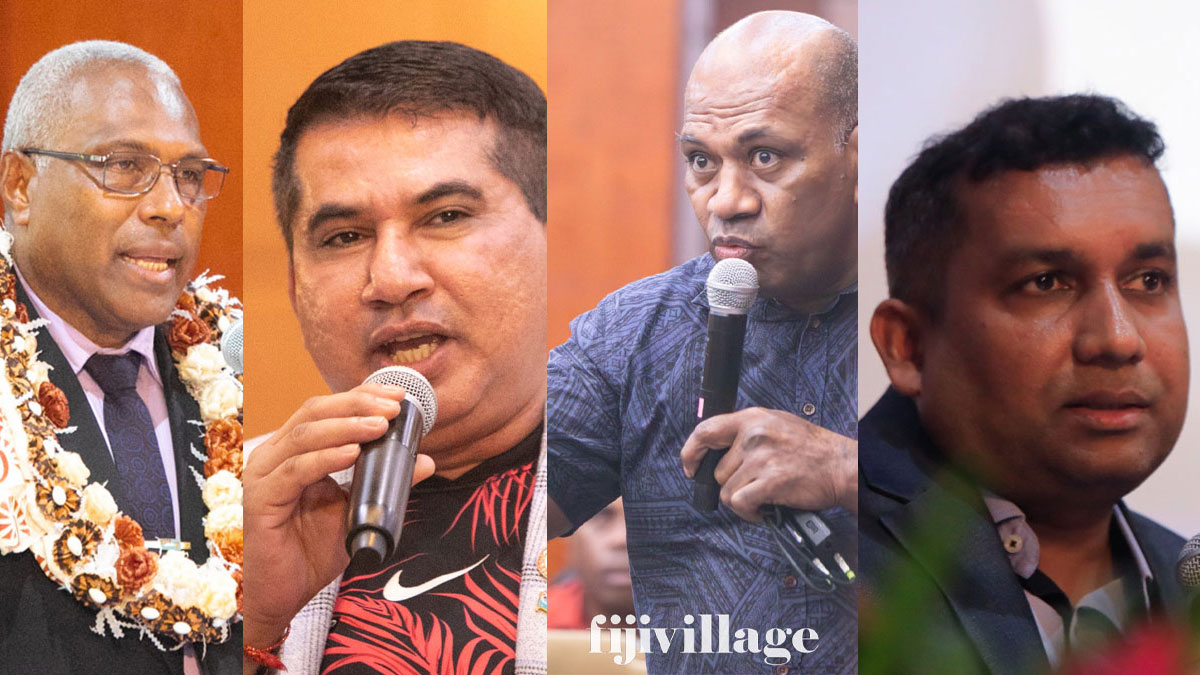
Opposition MPs, Sanjay Kirpal, Rinesh Sharma, Shalen Kumar and Sachida Nand voted for the motion.
If they would support the government side in today’s vote for the Bill, then the amendment to the constitution in Parliament will be passed as there will by 75 percent of support for the constitutional change.
Sharma has voted against the Bill, saying that the government should provide full details on what it plans to change in the 2013 Constitution.
13 MPs from the Opposition led by Opposition Leader, Inia Seruiratu voted against the tabling of the Bill last week.
/+ARTICLE-303468+ARTICLE/
/+ARTICLE-303470+ARTICLE/
/+ARTICLE-303471+ARTICLE/
/+ARTICLE-303473+ARTICLE/
/+ARTICLE-303478+ARTICLE/
/+ARTICLE-303482+ARTICLE/
/+ARTICLE-303485+ARTICLE/
/+ARTICLE-303484+ARTICLE/
/+ARTICLE-303483+ARTICLE/
/+ARTICLE-303489+ARTICLE/